
EP. 54 · MAY 26, 2026 · Community · Citizenship
54 | What Comes After Countries? The Future of Digital Nations & Borderless Citizenship
What if the nation state is just one chapter in human history? In this thought-provoking episode of the Nomad Summit Podcast, we sit down with Vikram Bharati – founder of Draper Nation – to explore one of the biggest questions imaginable: What comes after the nation state?
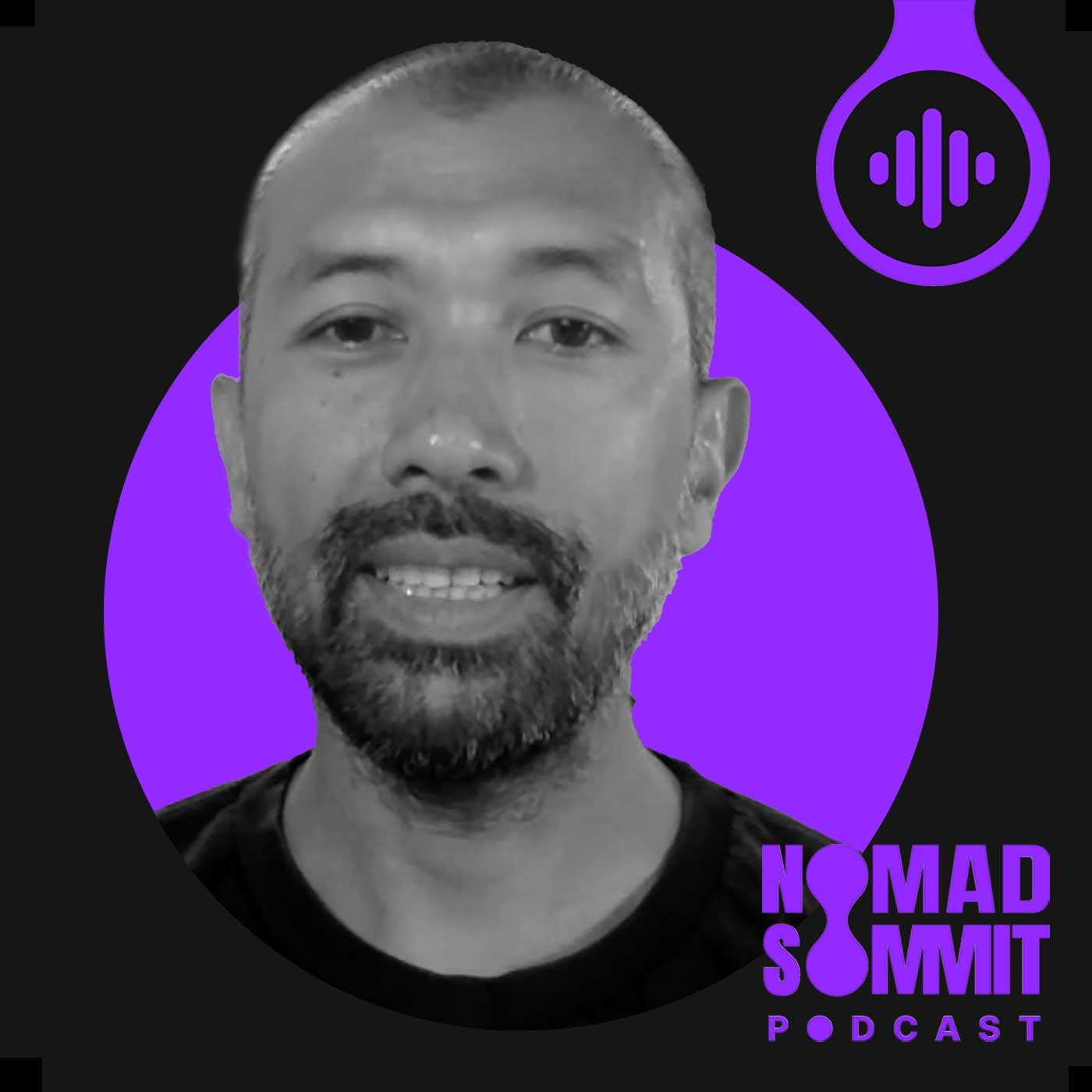
Vikram Bharati
Founder of Draper Nation.
54 | What Comes After Countries? The Future of Digital Nations & Borderless Citizenship
Show Notes
Most podcast conversations about digital nomads eventually land on familiar territory: visas, taxes, Wi-Fi, freedom, community, and the occasional laptop-on-the-beach myth.
This episode went somewhere else entirely.
In episode 54 of the Nomad Summit Podcast, we sat down with Vikram Bharati, founder of Draper Nation, for a big, bold, slightly mind-bending conversation about the future of countries, citizenship, governance, identity, and the question at the heart of his current work:
“What comes after the nation state?”
Yes. We went there.
The Most International Episode Yet
This was also one of the most globally scattered episodes we have recorded so far.
Christoph Huebner was in India. Alexandra Mosnitska was in Malaysia. Palle Bo was in Chiang Mai, Thailand. And Vikram Bharati, an American, joined from Singapore.
As Alexandra put it, this might have been:
“The most international podcast episode ever.”
Which feels appropriate, because the whole conversation was about what happens when identity, work, money, community, and even citizenship are no longer tied so neatly to one physical place.
So... What Comes After the Nation State?
Vikram describes Draper Nation as an experimental venture lab exploring one central question: what comes after the nation state?
That sounds abstract at first. But once he starts unpacking it, it becomes very relevant to digital nomads, remote workers, founders, and anyone who has ever felt that their life no longer fits neatly inside one national box.
“The theme is, it's a personal curiosity of mine, which is I'm trying to answer the question, what comes after the nation state?”
According to Vikram, the modern nation state is not as timeless as we might think. Empires, kingdoms, tribes, churches, dynasties, and monarchies all came before it. The current system of bordered countries with centralized governments is only one version of human organization.
And it may not be the final one.
Nation States Are Newer Than We Think
One of the early parts of the conversation dives into history. Vikram argues that while human civilization may be thousands of years old, the nation state is a relatively recent invention.
“The idea of the nation state, it only came out around three hundred years ago. But really the flourishing of the nation state, the idea, is only around a hundred years old.”
Christoph challenges this, asking whether ancient systems like the Roman Empire, Chinese dynasties, or Egyptian empires should count as nation states.
Vikram’s answer is clear: no. Those were empires and kingdoms, not nation states in the modern sense.
That distinction matters because if our current system had a beginning, it can also have an evolution.
Digital Nations in the Cloud
This is where the episode starts getting really interesting.
Vikram suggests that future forms of governance may not always be based on land. Some could exist in the cloud.
“It is very likely that you can have digital nations in the cloud that have no land, where there'll be a group of people who have sovereignty, but they have no land.”
That sounds futuristic, but Vikram points to current experiments already moving in that direction. He mentions special economic zones, parallel societies, decentralized governance models, and projects such as e-America, which asks whether the idea of America can exist digitally as a values-based cloud nation.
Is America a Place – or an Idea?
With e-America, Vikram is experimenting with the possibility of taking the founding values associated with America and moving them into a digital structure.
Not as a replacement for the physical United States, but as a parallel idea in the cloud.
That raises all kinds of questions. What does citizenship mean without territory? What does a passport mean if it does not come from a physical country? Can people belong to multiple systems at once?
And perhaps most importantly: who gets to decide?
Are Corporations Already Digital Nations?
One of the most surprising moments in the episode comes when Vikram says that digital nations may already exist. We just call them something else.
“One thing that I have come to realize recently Is that digital nations, they do exist today. We just don't call them digital nations. And that is actually the multinational corporation.”
He then points to companies like Apple, Google, and Facebook as examples of powerful landless organizations with massive economies, global presence, employees around the world, internal systems, benefits, influence, and relationships with governments.
We do not call them nations. But in some ways, Vikram argues, they already behave like landless states.
Could Google Become a Country?
This is one of those ideas that sounds ridiculous for about five seconds.
Then you start thinking about it.
Google has employees around the world. It has offices that function almost like embassies. It has internal benefits, internal rules, global influence, and an economy larger than many countries.
So what if, one day, organizations like this are not just companies?
What if they become something closer to citizenship communities?
That is exactly the kind of thought experiment Vikram wants us to consider.
Christoph Pushes Back
One of the reasons this episode works so well is that it is not just a futuristic monologue.
Christoph pushes back hard on some of the ideas – especially around passports, weak passports, trust, and the practical obligations that come with citizenship.
He points out that strong passports are powerful because they are backed by decades, sometimes centuries, of diplomacy, legal systems, reciprocal agreements, and trust between countries.
If a virtual nation issues a passport, what happens if one of its citizens commits a crime abroad? Who takes responsibility? Where does extradition happen? Who provides the safety net?
These are not small details. They are the exact problems that separate a fun idea from a functioning governance model.
Vikram’s Response: Nations Are Stories
Vikram does not claim to have all the answers. In fact, one of the refreshing things about this conversation is that he frames much of it as experimentation.
But his deeper point is that nation states themselves are also stories humans created.
“The idea of the nation state is just an idea. It's a story. We build the story, right?”
Before the nation state, people organized around kings, gods, tribes, empires, and religions. Today, we organize around countries. Tomorrow, perhaps some people will organize around values, digital identity, networks, or communities of choice.
That does not mean the old systems disappear overnight.
But it does suggest they may not be the only option forever.
What Does This Mean for Digital Nomads?
This is where the conversation becomes directly relevant to the Nomad Summit audience.
Digital nomads are already living in a way that does not fit neatly inside traditional systems. They work in one country, earn from another, bank in a third, pay taxes somewhere else, have friends across continents, and may feel emotionally connected to several places at once.
So when Vikram talks about borderless identity, digital citizenship, global migration technology, and new governance models, it is not just theory.
Nomads are already testing the edges of the current system every day.
Remote Work Changed the Equation
Once work became less tied to location, a lot of other things started shifting too.
Where should you live? Where should you pay tax? Which country should offer you services? Which community do you belong to? What if your strongest sense of belonging comes from people you meet online or through global events, rather than the country printed on your passport?
These are not questions for the distant future. They are already part of the nomad experience.
The Weak Passport Question
Alexandra brings in an important angle from personal experience: weak passports.
For people with powerful passports, global mobility can feel normal. For people with weaker passports, borders are much more real. More forms, more rejections, more uncertainty, more limitations.
So when someone talks about digital passports or cloud citizenship, that can sound incredibly attractive.
But it also raises big ethical and practical questions. Is this a real solution? A long-term experiment? Or just a nice-looking idea that may not help when you reach an actual border?
The episode does not pretend this is simple. And that is part of what makes it worth hearing.
Most Countries Offer Citizens Very Little?
Near the end of the conversation, Vikram shares one of his most provocative realizations.
“I came to realize that most countries in the world, most, actually offer no benefits to their citizens.”
He argues that citizens in wealthy countries often receive real benefits: healthcare, pensions, safety, security, financial systems, and institutional support.
But in poorer countries, many citizens may receive very little in return. They pay taxes and inherit national identity, but may not receive strong protection, services, or opportunity.
It is a bold claim, and definitely one that can start a debate.
Government Services Are Already Digital
Vikram’s second big realization is that many of the services people associate with government are already digital in nature.
“Things like financial services, healthcare, insurance, pension, voting, taxes, all of these things can be done on the computer.”
That does not mean everything can move online. As Vikram points out, you cannot eat on the internet or sleep on the internet.
But if a large part of what governments provide is already digital, then perhaps some future governance models can also be digital-first.
Countries like Estonia have already shown what a highly digital state can look like. Vikram is asking whether that logic can go even further.
Is This Utopian – or Inevitable?
That depends on how you listen.
If you expect a fully formed replacement for modern countries, you will not find that here.
If you are curious about the early experiments, tensions, contradictions, and possibilities around future governance, this conversation is fascinating.
Vikram is not saying that physical countries disappear tomorrow. He is saying that we should be curious about what new layers may emerge on top of them.
Cloud communities. Digital nations. Network states. Startup societies. Special economic zones. Borderless identities. New tools for global mobility.
Some may fail. Some may become marketing stunts. Some may become real.
But the experiments have already begun.
Why You Should Listen to This Episode
This is not a “five tips for getting a nomad visa” episode.
It is bigger, stranger, and more philosophical than that.
It is about the systems we live inside, the stories we inherit, and the possibility that future generations may think about countries very differently than we do today.
If you are a digital nomad, remote worker, founder, global citizen, or just someone curious about where the world might be heading, this episode will give you plenty to think about.
And probably a few things to argue about too.
Listen to the Full Conversation
In the full episode, we explore:
- What might come after the nation state
- Why nation states are a relatively modern invention
- How technology reshapes human organization
- Whether digital nations can exist without land
- Why corporations like Google could be seen as landless nations
- The problem with passports, trust, and legal recognition
- What weak passports reveal about global inequality
- Why government services may already be mostly digital
- How these ideas connect to digital nomads and remote work
Listen to episode 54 of the Nomad Summit Podcast with Vikram Bharati and join us for a conversation about countries, cloud citizenship, and the future of belonging.
Relevant Links
- Draper Nation: https://drapernation.com
- Draper Nation on LinkedIn: https://www.linkedin.com/company/drapernationhq
- Building startup societies: https://www.founderstartuphouse.com
- Experimenting with new types of nations: https://e-america.org
- Vikram on LinkedIn: https://www.linkedin.com/in/vikrambharati/
- Nomad Summit: https://nomadsummit.com
- Episode produced by RadioGuru: https://radioguru.co.uk
Keep Listening
EP. 51 · May 2026 · 27 min
51 | Horizontal vs. Vertical Travel – The Mindset Shift Most Nomads Miss
with Ilona Vinogradova
In Episode 51 of the Nomad Summit Podcast, we sit down with Ilona Vinogradova – a former BBC journalist turned global traveler who challenges the very idea of…
EP. 50 · Apr 2026 · 31 min
50 | He Lost Everything… Then Retired Early Anyway (FIRE Explained)
with Seven Chan
What does it really take to reach financial independence – and what happens after you get there? In this episode of the Nomad Summit Podcast, Christoph and…
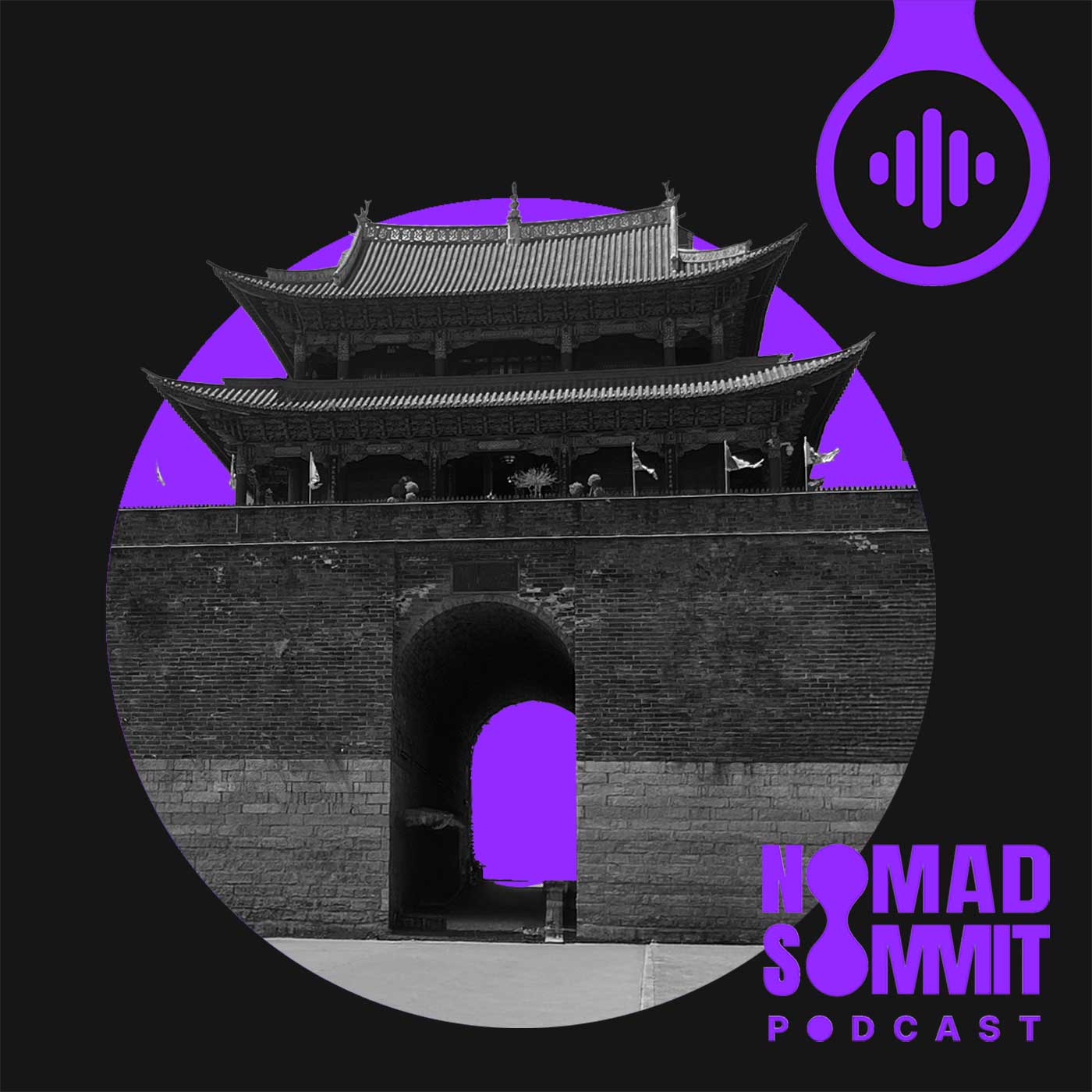
EP. 48 · Apr 2026 · 26 min
48 | Dali: The Chiang Mai of China?
with Christoph Huebner
In this fourth and final episode from China, Christoph Huebner travels to Dali – a small town in Yunnan province that's often described as the "Chiang Mai of…
EP. 47 · Apr 2026 · 44 min
47-inside-a-failing-digital-nomad-co-living-in-china
with Christoph Huebner
In this third episode from China, Christoph Huebner travels from Shanghai to the Chengdu region to explore the digital nomad scene – and what he finds is a tale…
EP. 46 · Apr 2026 · 40 min
46 | Shanghai: A City That Can Be Both Easy and Hard for Nomads
with Christoph Huebner
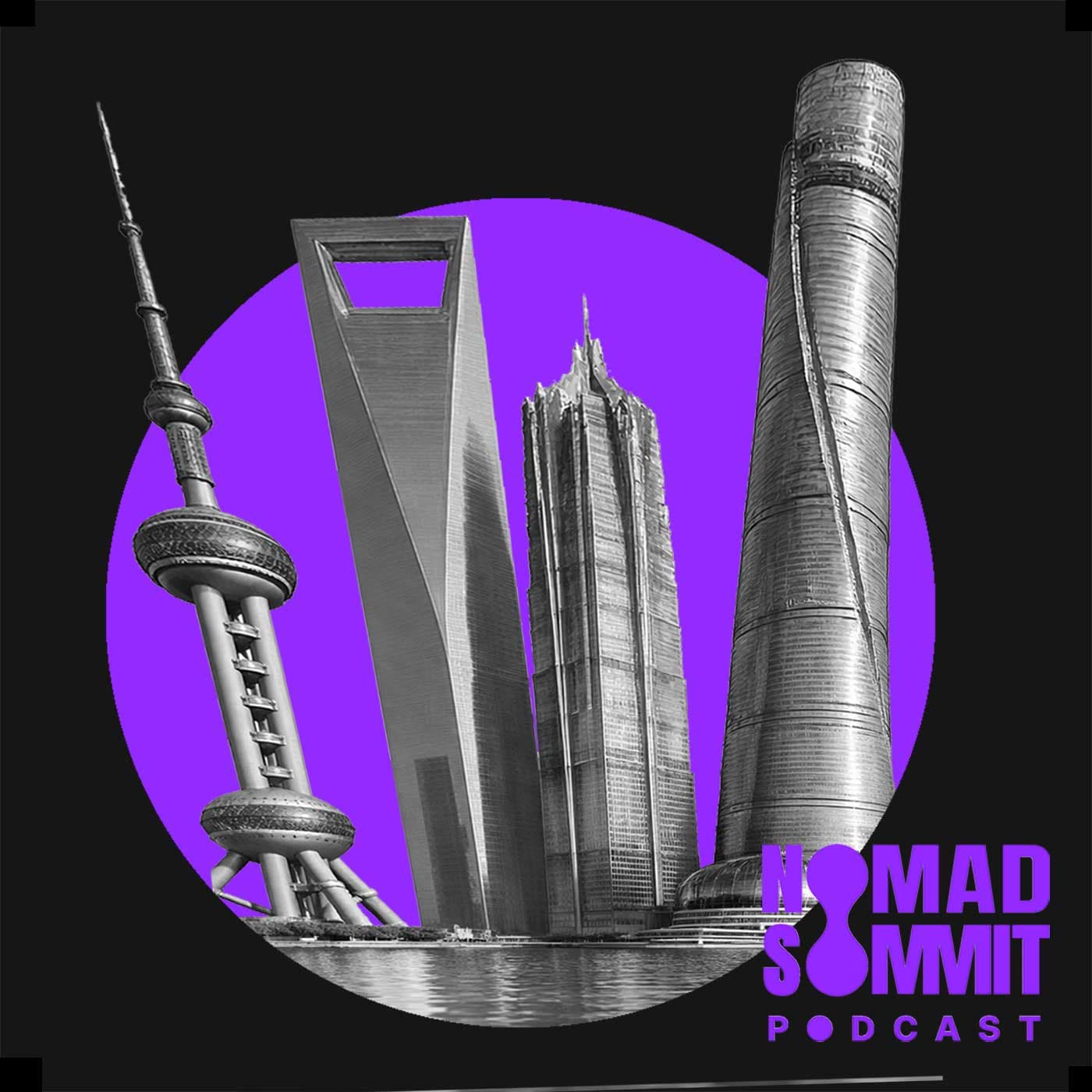
In this second episode of Christoph Huebner's four-part journey through China, we land in Shanghai – a city of 25 million people, towering skylines, and…
EP. 45 · Mar 2026 · 28 min
45-digital-nomads-in-china-its-not-what-you-think-1-4
with Christoph Huebner
What is it really like to be a digital nomad in China? In this first episode of a four-part series, Christoph Huebner travels across China to explore what the…

Never Miss an Episode
Get new episodes, event announcements, and nomad insights delivered straight to your inbox.