
EP. 49 · APR 22, 2026 · China · Travel & Lifestyle · Asia · Shanghai · Shenzhen · Dali
49 | Bonus Episode: China for Digital Nomads – Worth It?
Digital Nomad in China – The Reality In this bonus episode, we wrap up Christoph Huebner's four-week journey through China and take a closer look at what it's really like to live and work remotely in the country. After exploring cities like Shenzhen, Shanghai, Chengdu, and Dali, this is where we zoom out and connect the dots.

49 | Bonus Episode: China for Digital Nomads – Worth It?
Key Takeaways
- Working as a digital nomad in China is possible but comes with daily challenges.
- VPN access in China is unreliable and can become a daily frustration for remote workers.
- Some tools like Zoom may work in China without a VPN, while Google services do not.
- China is highly advanced in technology but more traditional in other areas of society.
- High levels of automation can make human interaction in China feel limited.
- China's digital nomad scene is still developing and often centred outside the major cities.
- Flexibility and preparation are key for anyone planning to work remotely from China.
Show Notes
Digital Nomad in China – The Reality
After four episodes on the road in China, this bonus episode of the Nomad Summit Podcast does something different. It stops moving for a moment and starts reflecting.
Christoph Huebner has now spent four weeks exploring what it actually looks like to live and work remotely in China – from the mega-cities of Shenzhen and Shanghai to the more relaxed pace of Dali. And now comes the obvious question: was it worth it?
The answer, as you might expect, is not simple.
A Bonus Episode That Goes Beyond the Travel Diary
This is not just a recap. It is the deeper dive. The episode where Christoph and Palle Bo zoom out and talk honestly about what worked, what did not, and what surprised them most.
And right from the beginning, one big myth gets smashed.
The VPN Fantasy Meets Reality
Before going to China, Christoph had been told something that sounds very reassuring to any digital nomad: don’t worry, everybody uses a VPN, and it is no big deal.
Well… not exactly.
“That’s definitely exaggerated. It’s a pain. Every workday started with 20 minutes of figuring out what VPN configuration works today.”
That is not the kind of sentence remote workers want to hear when deadlines are involved.
In the episode, Christoph describes a daily routine of trial and error with different VPN settings, different providers, and different levels of frustration. Sometimes one setup worked one day and failed the next. Sometimes nothing worked. And while a few tools slipped through the firewall more easily than expected, others became a serious obstacle.
Some Tools Worked. Some Really Did Not.
There were a few surprises. Zoom, for example, worked without a VPN. So did Pipedrive. That made the work trip possible. But services many digital nomads rely on every day – especially Google Drive – became a recurring headache.
This matters because it turns the whole question of “Can I work remotely from China?” into something more specific.
Yes, you probably can.
But maybe not in the smooth, frictionless, laptop-lifestyle way you imagined while looking at travel photos.
China’s Nomad Scene Is Not Where You Might Expect
Another big takeaway from the episode is that China’s digital nomad community is not really centered in the huge cities that outsiders might expect.
That means if you arrive in places like Shanghai or Shenzhen thinking you will find a familiar nomad district with cafés, coworking spaces, and a rotating cast of international freelancers, you may need to adjust your expectations.
According to Christoph, the more interesting communities were outside the big cities, in places with better air, better scenery, lower costs, and more breathing room.
“You don’t meet them in a hotspot, like a coworking space or a co-living. There are dedicated places for that, that are more rural.”
Why Dali Keeps Coming Up
That helps explain why Dali became such an important stop in this series. In the previous episode, Christoph described it as the place that finally gave him the kind of co-living and community feel many international nomads would recognize. In this bonus episode, that impression only grows stronger.
“The Chinese told me beforehand that Dali would be like the Chiang Mai of China, and I absolutely get these vibes.”
Mountains. A lake. An old town. Slower pace. More connection. If the earlier episodes raised the question, this one makes it clear that Dali was not just a nice ending – it was a revealing contrast.
What Counts as a Digital Nomad, Anyway?
One of the most interesting threads in the episode is something Palle and Christoph keep circling back to: what exactly is a digital nomad?
Because in China, the definition seems broader than the one many international nomads use. There, anyone who can work remotely and choose where they live may be seen as a digital nomad, even if they are not constantly traveling from country to country.
That may sound like a technical distinction, but it shapes the whole ecosystem. It changes who these communities are for, how they function, and what kinds of people you meet when you get there.
Then Meng Walks In
And then the episode introduces Meng – or Echo, her English name – a Chinese remote worker who, in Christoph’s view, really does fit the more classic international definition of a digital nomad.
Her story is one of the strongest parts of the episode.
She had spent almost eight years in a traditional company job, going into the office every day, until COVID pushed her to rethink what she wanted from life.
“I pushed myself to be a machine, to work like a machine.”
That is one of those lines that cuts straight through the noise.
Meng’s Version of Freedom
Like many people, Meng had been following the script she had inherited: work hard, save money, maybe buy an apartment in Beijing, and then enjoy life later. But during the pandemic, that future-focused plan stopped feeling convincing.
“I felt like I should focus more on the moments and also the people around me.”
So she prepared for one or two years, quit her old job, and moved into a more flexible setup where she works as a freelancer in the insurance field while traveling around.
Her journey included Chiang Mai, Malaysia, and Dali. And even though she still kept a base in Beijing for a while, she eventually decided to give that up too because the rent was too high and the freedom elsewhere made more sense.
A Rare Example Inside China
What makes Meng so interesting in this story is not just that she works remotely. It is that she does so in a way that mirrors the international nomad lifestyle more closely than many of the people Christoph met on the trip.
And yet even she admits this is still unusual.
“No, actually not. It’s still very unique.”
That single quote says a lot. Yes, the lifestyle exists in China. But it still seems to be the exception rather than the rule.
Coming From the Future – and the Past
If there is one line in the episode that captures China best, it may be this one:
“China definitely lives 10, 15 years in the future in terms of tech, but 20, 30 years in the past in terms of development of society.”
That is quite a statement. And Christoph backs it up with examples.
On the one hand, there is the hyper-digitized daily life: QR codes, automation, AI tools, seamless payments, smart devices, and a sense that technology has already swallowed the future and moved on.
On the other hand, there are things that feel surprisingly dated to him – smoking in public, social attitudes, and a kind of friction in public behavior that does not match the polished digital surface.
The Human Side Gets Lost Sometimes
One thing Christoph clearly missed was casual human interaction.
“In China, everything is digital and automated.”
For a solo traveler, that matters. You do not just want your coffee. You also want the small exchange with the barista, the chance encounter, the little moments that make a place feel human. In China, he often felt those moments had been replaced by screens, QR codes, and mini apps.
That does not make China cold. In fact, he repeatedly describes individuals and small groups as extremely warm and helpful. But once systems and crowds take over, that warmth can disappear into anonymity.
What About Politics?
Another fascinating part of the episode is the discussion around political conversations. Before going to China, Christoph had been warned not to mention certain topics – especially Taiwan.
And yet once he was there, reality turned out to be more complicated than the warning labels suggested.
“My key takeaway over this and many other conversations – I was feeling much less restricted than I expected.”
That does not mean there are no boundaries. It means private conversations were often more open and nuanced than he had anticipated. Which, once again, fits the broader theme of the whole series: China is rarely as simple as outsiders imagine.
Not Positive. Not Negative. Just More Nuanced.
When Palle asks whether the trip changed the way Christoph sees China, the answer is one of the strongest summaries in the entire episode.
“Not in a positive way. Not in a negative way. Just in a more nuanced way.”
That feels honest. It also feels earned.
After four weeks, the picture is no longer black and white. It is more detailed, more contradictory, more interesting – and in some ways harder to explain in a single sentence.
So… Should Digital Nomads Consider China?
This is the big question, and the episode does not dodge it.
Christoph’s answer is basically yes – but with conditions.
He says he would definitely go back. In fact, at one point he even considered making it a regular part of his yearly travel plans to use the 30 days of visa-free stay and explore different parts of the country in future years.
But he would prepare differently next time.
If you are going to work remotely from China, this episode makes one thing very clear: do not go with a packed schedule and a workflow that depends heavily on blocked tools or instant coordination.
Remote Work, But Make It Async
The practical advice here is solid. Go when your work can tolerate delays. Expect friction. Prepare your hardware well. Consider extra security precautions. Do not assume your usual tools will cooperate just because someone on the internet told you they would.
And if your work involves sensitive data, Christoph suggests being extra careful. He even talks about receiving security notifications suggesting attempted unauthorized firmware changes on his laptop while using highly encrypted services.
That is not exactly the kind of souvenir most travelers hope to bring home.
Then It Ends Around a Dinner Table
After all the talk about VPNs, definitions, nuance, and digital overload, the episode ends in the most human way possible – with a farewell dinner in Dali.
The people from both NCC and CYC come together around a typical Chinese round table. There is barbecued duck, spicy chicken, beef, eggplant, vegetables, and the usual chaos of trying to translate a menu on the fly.
It is warm, noisy, social, and slightly messy. Which is probably the perfect way to end a series about a country full of contradictions.
And as someone at the table says:
“This is the best restaurant in Dali.”
Honestly, after everything that came before it, that line lands exactly where it should.
Why This Bonus Episode Matters
This episode works because it does not try to turn China into a simple pitch or a simple warning. Instead, it gives you a fuller picture.
It acknowledges the beauty of places like Dali. It gives a rare inside look through Meng. It is honest about the technical frustration. And it leaves room for curiosity instead of pretending there is only one correct conclusion.
If Episode 48 was the place-based discovery, Episode 49 is the reality check.
Listen to the Episode
If you have been following this China mini-series, this bonus episode is where the story really settles into focus. And if you have ever wondered whether China could work for you as a digital nomad, this is the episode that gives you the most honest answer.
Listen to Episode 49 of the Nomad Summit Podcast.
Episode produced by RadioGuru.
Relevant Links
Nomad Summit: https://nomadsummit.com
Episode produced by RadioGuru: https://radioguru.co.uk
Keep Listening

EP. 34 · Jan 2026 · 32 min
34 | Chinese Nomads From Shanghai to Chiang Mai
with Feng Ding & Summer Pan
What does the digital nomad lifestyle look like beyond the Western bubble? In this episode of The Nomad Summit Podcast, we sit down in Chiang Mai with Feng Ding…
EP. 48 · Apr 2026 · 26 min
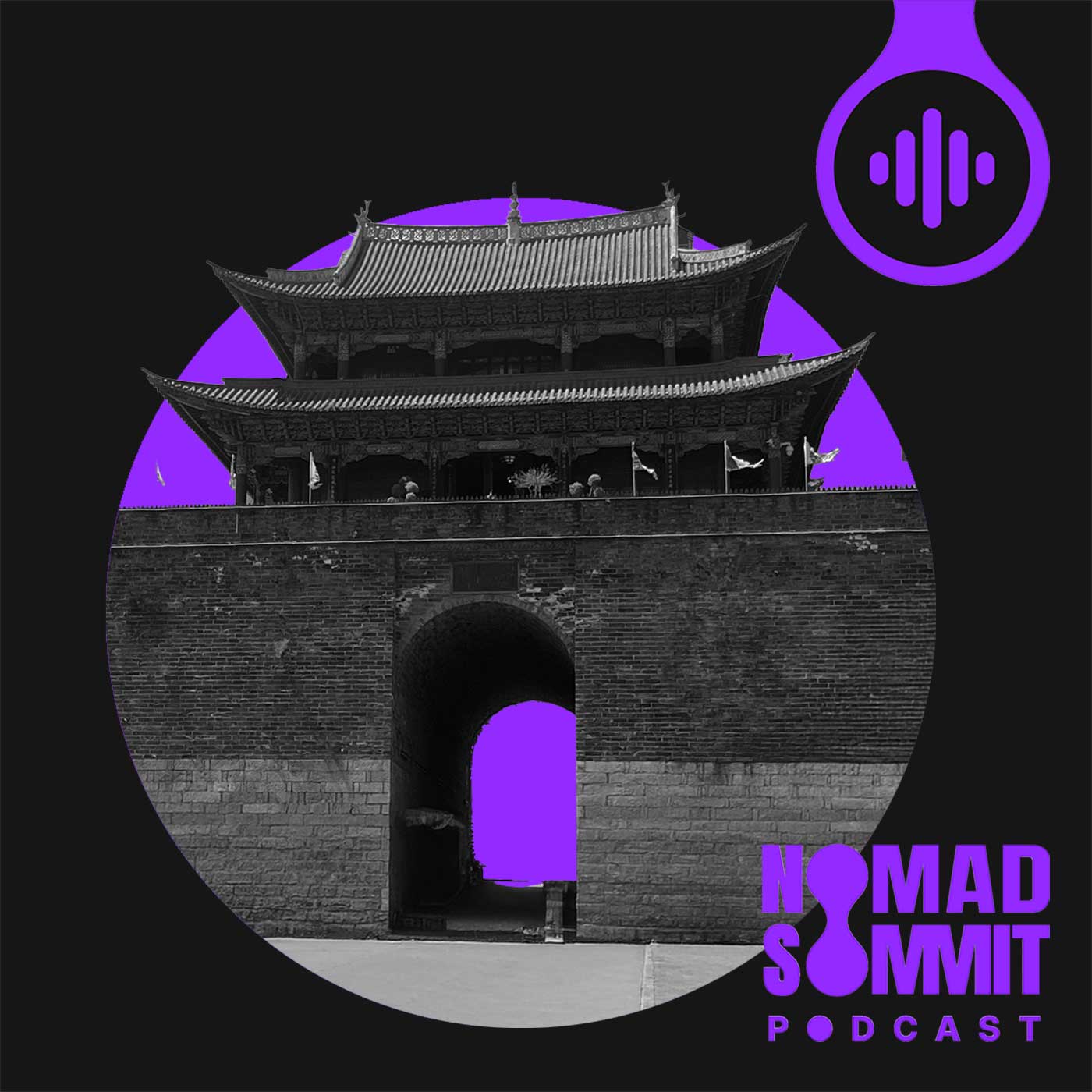
48 | Dali: The Chiang Mai of China?
with Christoph Huebner
In this fourth and final episode from China, Christoph Huebner travels to Dali – a small town in Yunnan province that's often described as the "Chiang Mai of…
EP. 46 · Apr 2026 · 40 min
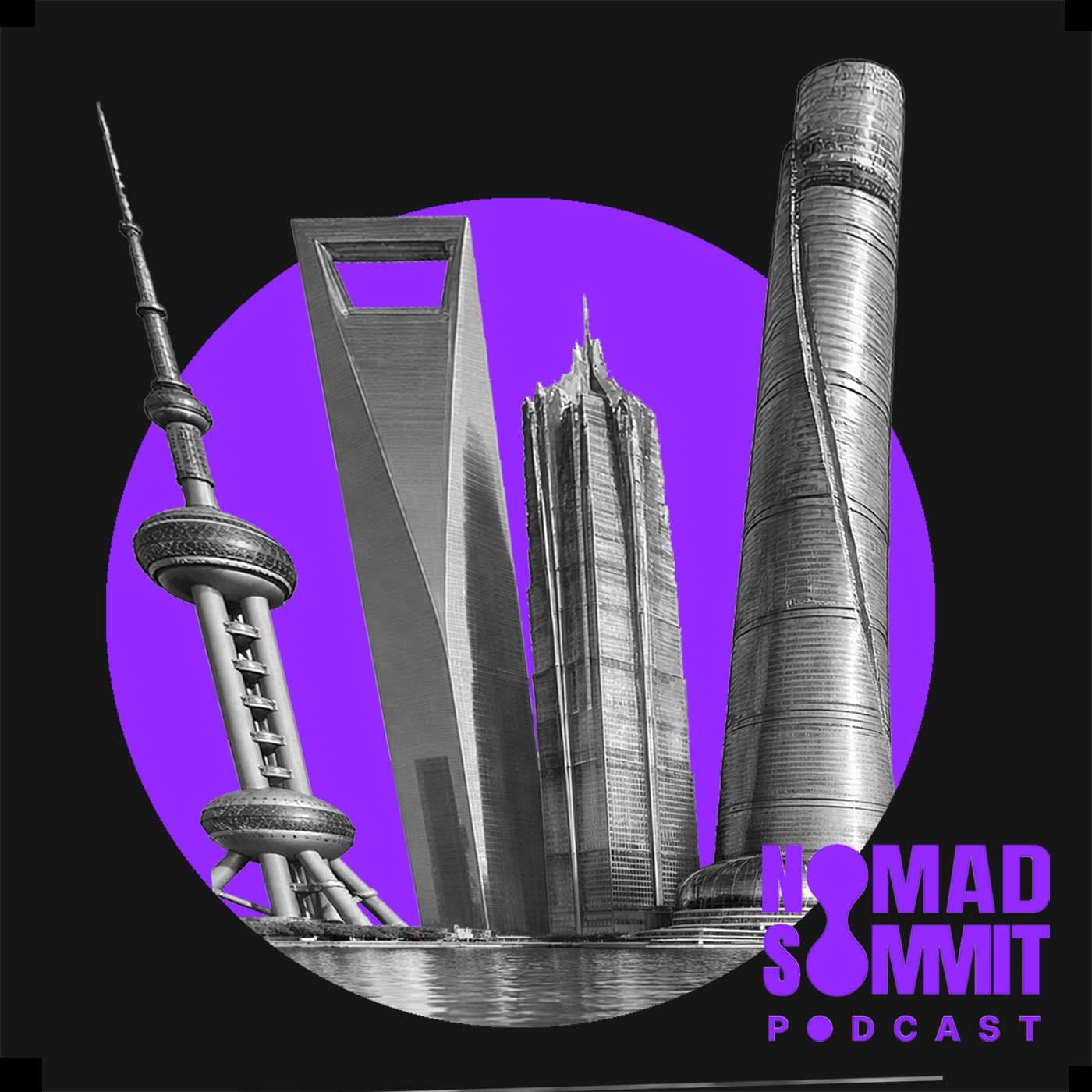
46 | Shanghai: A City That Can Be Both Easy and Hard for Nomads
with Christoph Huebner
In this second episode of Christoph Huebner's four-part journey through China, we land in Shanghai – a city of 25 million people, towering skylines, and…

EP. 45 · Mar 2026 · 28 min
45-digital-nomads-in-china-its-not-what-you-think-1-4
with Christoph Huebner
What is it really like to be a digital nomad in China? In this first episode of a four-part series, Christoph Huebner travels across China to explore what the…

EP. 76 · Oct 2026 · 29 min
76 | Is Asia Becoming the Future of Digital Nomadism?
with Miho & Daniel Beck
Asia's digital nomad scene is evolving fast – and it's no longer just about Chiang Mai and Bali. From the Philippines to Japan, China, and beyond, new…

EP. 69 · Sep 2026 · 27 min
69 | How to Stay Fit as a Digital Nomad – Even When Your Routine Falls Apart
with Riley Schinella
What happens to your fitness routine when your gym, kitchen, schedule, and time zone keep changing? In Episode 69 of the Nomad Summit Podcast, we talk with…

Never Miss an Episode
Get new episodes, event announcements, and nomad insights delivered straight to your inbox.